Intro
Table of Contents
Overview
High availability disaster recovery (HA/DR) provides a high availability solution for both partial and complete site failures. HA/DR protects against data loss by replicating data changes from a source database, called the primary database, to the target databases, called the standby databases. HA/DR is crucial for ensuring the availability, resilience, and data integrity of our systems.It is a critical component of our organization's IT strategy, designed to ensure the uninterrupted operation of our systems and safeguard our data in the face of unexpected disruptions.
The Need for HA/DR
In today's interconnected and data-driven world, downtime, data loss, or system outages can have severe consequences, including financial losses, damage to reputation, and legal liabilities. Our reliance on digital systems and the continuous flow of information makes it imperative to address the following key challenges:
1. System Reliability
Our organization depends on a wide range of systems and applications to conduct daily operations, serve customers, and support decision-making. Any interruption or failure in these systems can result in productivity losses and customer dissatisfaction.
2. Data Protection
Data is one of our most valuable assets, and its loss or corruption can have far-reaching implications. Ensuring data integrity and availability is paramount, especially in an era where data breaches and cyberattacks are on the rise.
3. Compliance and Regulations
We operate in an environment governed by various regulatory requirements. Compliance with data protection and retention standards is mandatory, and HA/DR measures help us meet these obligations.
4. Business Continuity
In the event of natural disasters, hardware failures, or other unforeseen incidents, we must be prepared to maintain essential operations without significant disruption. HA/DR ensures that we can recover swiftly and continue serving our customers.
Goals of HA/DR
Our HA/DR strategy aims to achieve the following key objectives:
Minimize Downtime: Reduce system downtime to a minimum, ensuring that our critical services are available to users without interruption.
Data Resilience: Protect our data from loss, corruption, or unauthorized access, ensuring data is consistently available when needed.
Rapid Recovery: Enable quick recovery of systems and data in the event of failures or disasters, allowing us to restore normal operations swiftly.
Compliance: Ensure compliance with legal and regulatory requirements related to data protection, retention, and disaster recovery.
Business Confidence: Build trust with our stakeholders, customers, and partners by demonstrating our commitment to operational continuity and data security.
HA/DR Components
[Get the content]
HA/DR Procedures
Failover Procedure
These are the steps which are needed to be performed for DR.
- Create ENV on region 1.
- Deploy a sample application to region 1 ENV using Pipeline template.
- Create another ENV on region 2.
- Re-Run the pipeline template pointing to region 2.
- Verify the application url in region 2.
Data Backup and Restore
[Get the content]
Disaster Recovery Plan
[Get the content]
Monitoring and Testing
[Get the content]
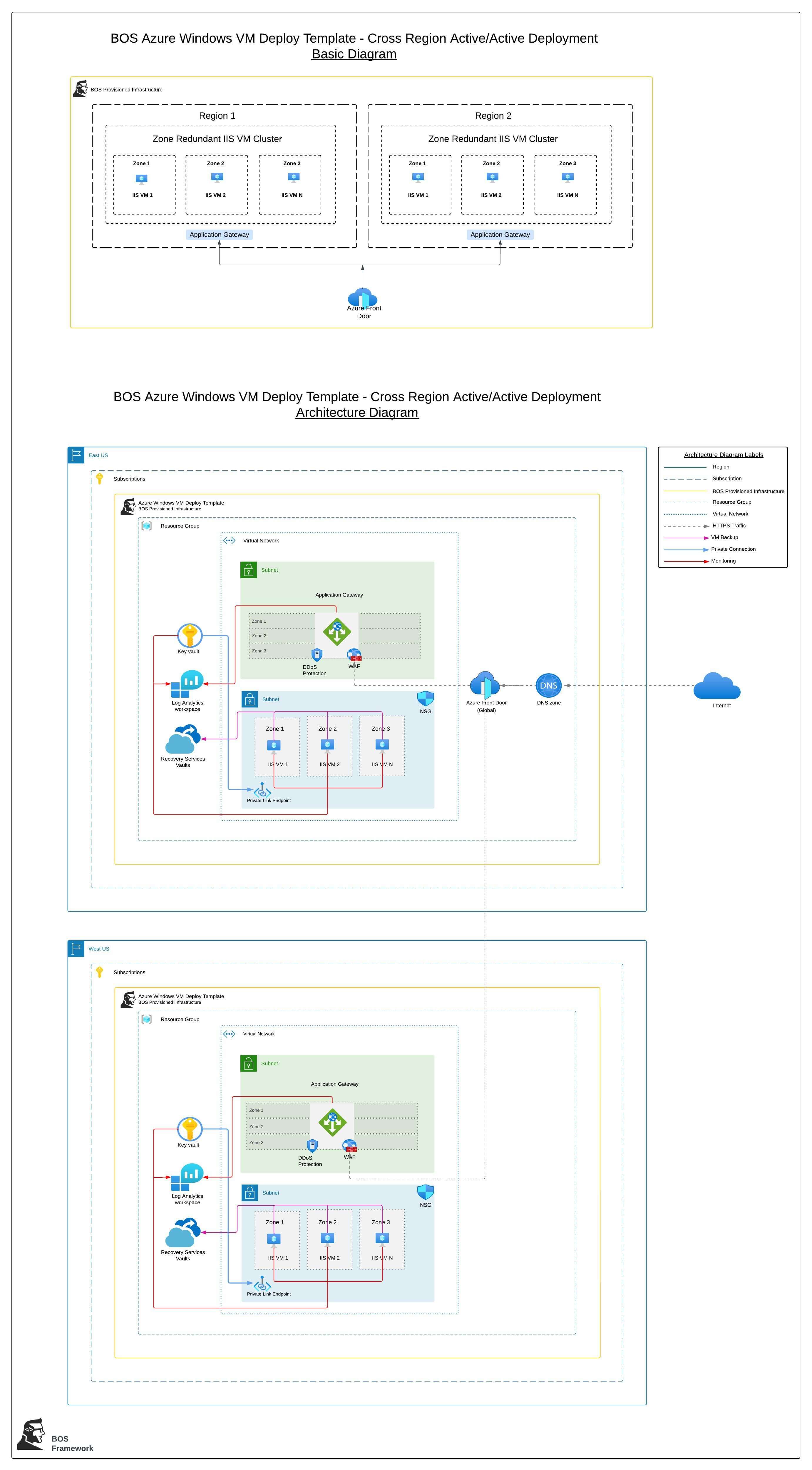
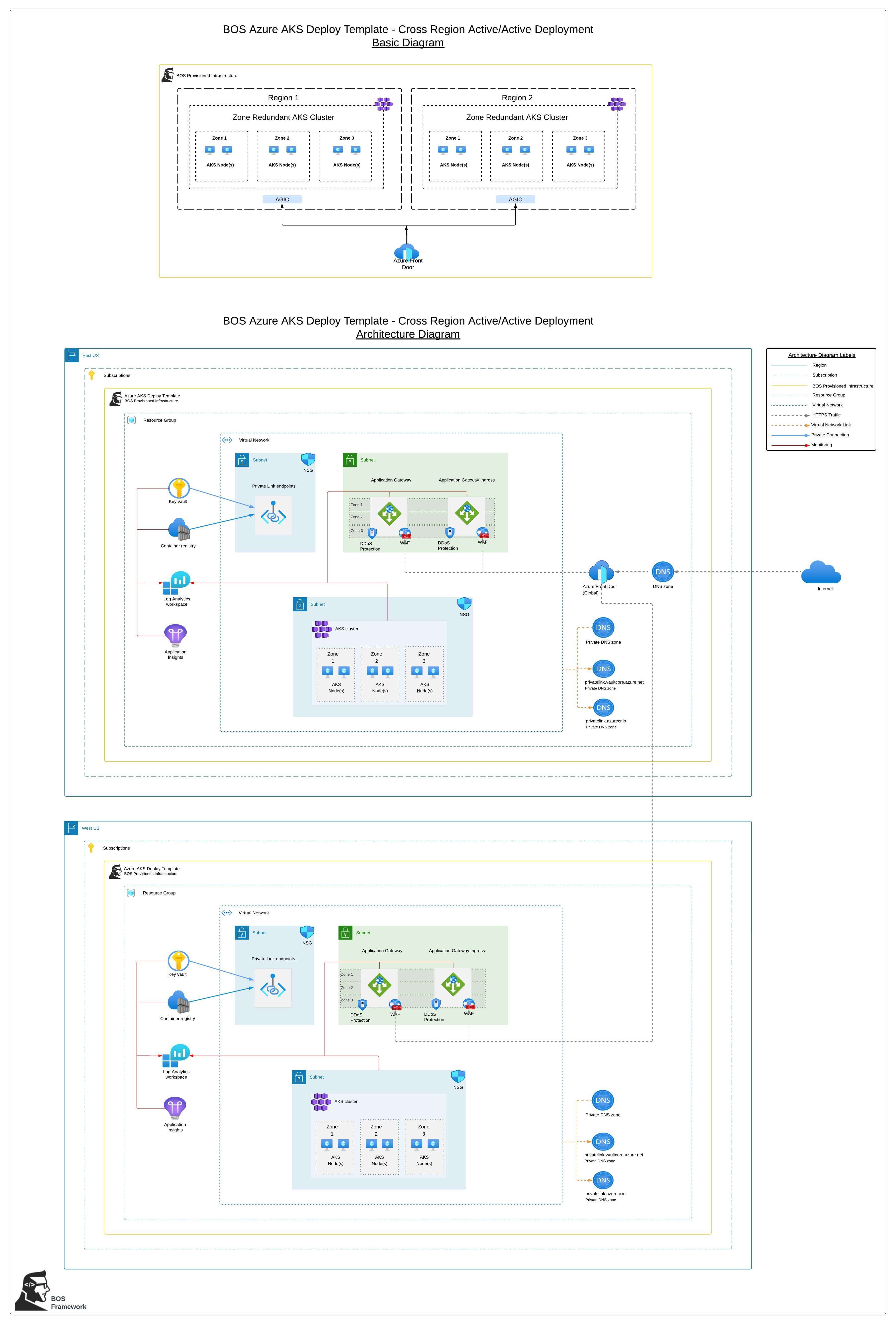
Supported Template
BOS out of the box supports enivronment templates which can be used for deployment to Azure AKS and Azure Windows VM .
BOS Azure AKS Deploy Template
- BOS Azure AKS Deploy Template: Below is the diagram which shows the architecture.
BOS Azure AKS Architecture Diagram
BOS Azure Windows VM Deploy Template (DR)
- BOS Azure Windows VM Deploy Template: Below is the diagram which shows the architecture.
BOS Windows VM Architecture Diagram (DR)